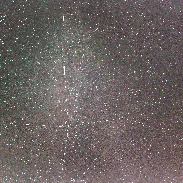
Cygnus on a tripod
Taken by Ron on October 6, 2015 @ Tampa Florida
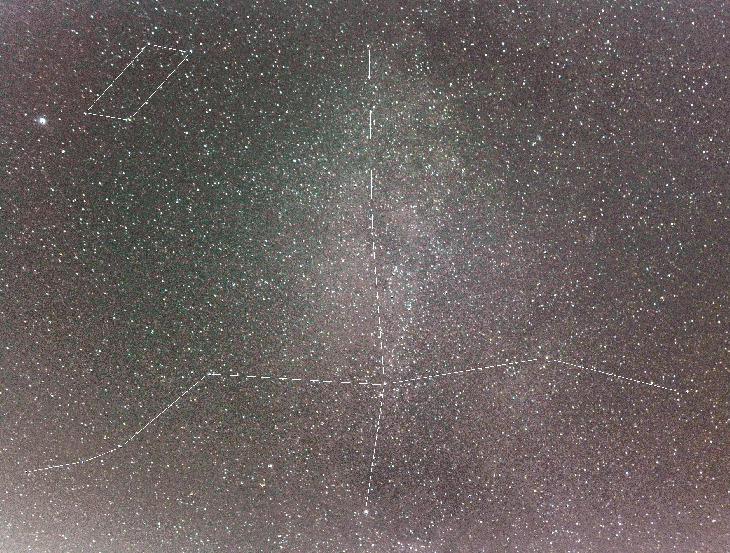
Click photo for larger image
  Camera Used: Unavailable Unavailable
Exposure Time: Unavailable
Aperture: Unavailable
ISO: Unavailable
Date Taken: Unavailable
 
More images
Details:
Thought I would see if it was possible to shoot the constellation Cygnus from a stationary tripod. Canon T4i kit lens set at 28mm, 5 seconds x 41 frames ISO 800, stacked in DSS
Photographer's website:
No URL provided.
Comments
  You must be logged in to comment.  
I do this regularly and there is a formula for determining exposure length when not using a clock motor drive.
Its focal length of normal lens divided by the lens you are using times 10 = maximum exposure time in seconds.
A normal lens was about 50mm.
This formula is old, before the digital camera age, so I am not sure about digital camera crop factor changing the numbers.
Something to maybe use for trial and error.
Posted by orbital1 2015-10-13 15:44:17
The 500 rule: max. exposition without startrails in seconds is the result of dividing 500 by the focal lenght (FL) of the objective. Valid for full frame (FF) camera and mid to high declination stars (e.g. Cygnus). For a non FF camera, multiply the crop factor (Nikon DX=1,5; Fourthids=2; etc.) by the FL of the lens.
Example: the max. exposition time for a 50mm FF lens is 500/50=10 seconds. If is a 50mm DX lens (1,5 crop factor), 50x1,5=75; 500/75=6,6 seconds.
For a low declination star, like Orion belt or so, use 400 instead of 500 to ensure pinpoint results.
Easy!

flickr.com/eirexas
Posted by eirexas 2015-10-13 19:14:25
SORRY guys I didnt mean to mislead but I made a mistake on the numbers,one of those senior moments.

That should read 41 x 15 seconds. This kind of imaging is fairly new to me and I enjoy the experimenting.

Thanks for the info and help
Posted by Ron 2015-10-14 05:02:00
 
The Northern Lights: A Magic Experience
Aurora photo tours
Support SpaceWeather.com
Home | FAQ | Contact the Webmaster
©2019 Spaceweather.com. All rights reserved.