More images
Details:
 |
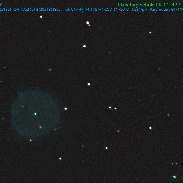
The Planetary Nebulae season is here.
Here is an image of a fainter nebula in the constellation Hercules.
It is at a distance of approximately 3,800 light years.
https://en.wikipedia.org/wiki/Abell_39
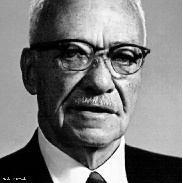
It was discovered by Rudolph Minkowski ( May 28, 1895 – January 4, 1976)
in 1946.
He earned his Ph.D. in physics at the University of Breslau
(now Wroclaw) after serving in the German army during World War I. He taught and
worked—first in atomic physics, later in observational astronomy in Hamburg from
1922 to 1935.
He later worked at Mt. Wilson and Mt. Palomar Observatories in USA,
investigated spectra of novae and supernovae and their remnants, especially
the Crab nebula, where he found the central star.
Together with Walter Baade, they divided supernovae into Types I and II.
(The lunar crater Minkowski is also named
after him and his uncle)
https://en.wikipedia.org/wiki/Rudolph_Minkowski
Time: 22:57UT 2026-05-06 Filter & Exp. H-Alpha(20x185) O-III(7x245) B(20x185)Sec
Tel: C14 @ f/4.1 ST-7 CCD @ -20°C 1.28"/pix Paramount GT-1100S
Odd Trondal Obs.code 238 (Uranium). Oslo Norway.
I also used H-Alpha & O III filters (O-III is emission from thin O++ plasma, H-Alpha from H II from H+ plasma), and remember "Physics is everything" ref. Don Lincoln
Software used:TheSky6,CCDSoft 5, MSB Astroart 2.0, 8.0, Paint
Previous Planetary Nebulae images :
The Cat's Eye Nebula, NGC 6543 in Draco
Planetary nebula M 57 in Lyra
The small ring nebula in the constellation Lyra
A planetary nebula in the constellation Cepheus
Photographer's website:
https://www.flickr.com/photos/odd_trondal/
|