More images
Details:
 |
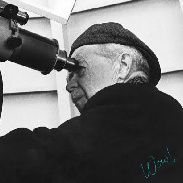
Named in honor of Yrjö Väisälä who was born (1891) in
the Grand Duchy of Finland within the Russian Empire.
https://en.wikipedia.org/wiki/Yrj%C3%B6_V%C3%A4is%C3%A4l%C3%A4
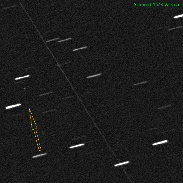
Discovered 1949-10-27 by Sylvain Arend at the Uccle Observatory in Belgium
https://ssd.jpl.nasa.gov/tools/sbdb_lookup.html#/?sstr=2001573&view=OPD
Väisälä has also created an orbit calculation method that avoids solutions of higher-degree equations.
(In Gauss's method, the distance from the Earth of, for example, a planet
is solved with an equation of the 8th degree.) Väisälä completely omits
the determination of the distance. His procedure is that one guesses a value of the
distance, calculates through his method, then one can guess a new better value of the distance
and calculates through the method. In the third round,
an improved value for the distance can be found through interpolation.
One arrives at the position of the planet in space at 3 different times, and then the orbit elements can be calculated.
The method is unique in its simplicity.
Y. Väisälä : Eine einface Methode der Bahnbestimmungen.
Annales academiæ scientiarum Fennicæ. Ser.A. Tom. LII, N:o 2. (1939)
A lunar crater is also named after him.
https://en.wikipedia.org/wiki/V%C3%A4is%C3%A4l%C3%A4_(crater)
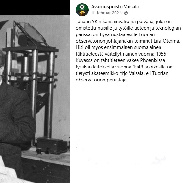
Translation of the text on the 3. image :
Today, on the UN International Day for Women and Girls in Science and Technology,
it is good to highlight Liisi Oterma, who also served as the director of the Tuorla Observatory.
Liisi was also the first Finnish woman to receive a doctorate in astronomy in 1955!
The photo shows astronomy people at the Department of Physics in Phoenix in 1948 and on
the right is of course Academician Yrjö Väisälä, the founder of the Tuorla Observatory.
Time: 23:21UT 2025-06-20 Exp. 117 x 30 sec.
Telescope 0.254m f/6 ST-10XME CCD -15°C 0.9"/pix
Odd Trondal Obs.code 238 (Uranium). Oslo Norway.
Software used:TheSky6,CCDSoft 5, MSB Astroart 2.0, 8.0, Paint
|
Photographer's website:
https://www.flickr.com/photos/odd_trondal/
|