More images
Details:
 |
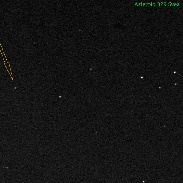
329 Svea is an asteroid from the asteroid belt and the namesake of the small Svea family,
approximately 81 kilometers (50 miles) in diameter. The C-type asteroid and is
probably composed of carbonaceous material.
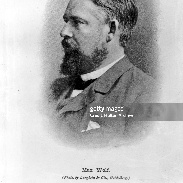
It was discovered by Max Wolf on 21 March 1892 in Heidelberg.
Maximilian Franz Joseph Cornelius Wolf, (ohhh boy), was a German astronomer known for his work on asteroids and astrophotography.
He discovered the comet 14P/Wolf in 1884, when he was only 21 years old.
He introduced the photographic search for asteroids, where asteroids could be
seen as streaks of light in a photograph due to their rapid movement across
the sky in contrast to the stars which were stationary.
Using this method, he discovered a new asteroid called 323 Brucia on 22 December 1891.
He went on to discover over 200 asteroids.
He was professor of astronomy at the University of Heidelberg from 1893 and director
of the university's new observatory at Königstuhl from 1909.
At the same time and independently of Edward Emerson Barnard, Wolf proposed that
the 'voids' in the Milky Way are dark nebulae. He also discovered several galaxy
clusters, including the Coma Cluster in 1901, and the Nova Aquilae in 1925.
https://snl.no/Max_Wolf
The Asteroid is named after Mother Svea, the personification of Sweden (Svea-empire ).
She is often portrayed as a powerful "shield woman", usually with one or two lions.
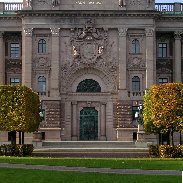
One finds several representations of Mother Svea in Sweden, including at the wall of
the Parliament in Stockholm.
Time: 22:13UT 2025-06-23 Exp. 12 x 15 sec.
Telescope 0.254m f/6 ST-10XME CCD -15°C 0.9"/pix
Odd Trondal Obs.code 238 (Uranium). Oslo Norway.
Software used:TheSky6,CCDSoft 5, MSB Astroart 2.0, 8.0, Paint
|
Photographer's website:
https://www.flickr.com/photos/odd_trondal/
|