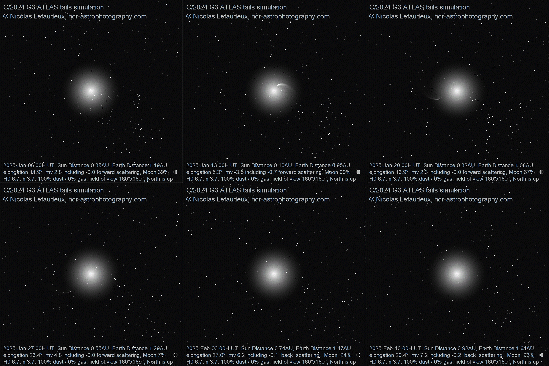
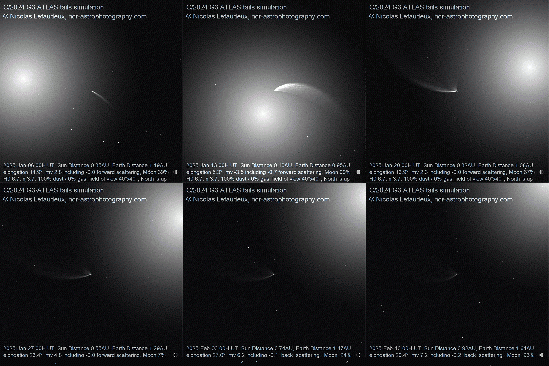
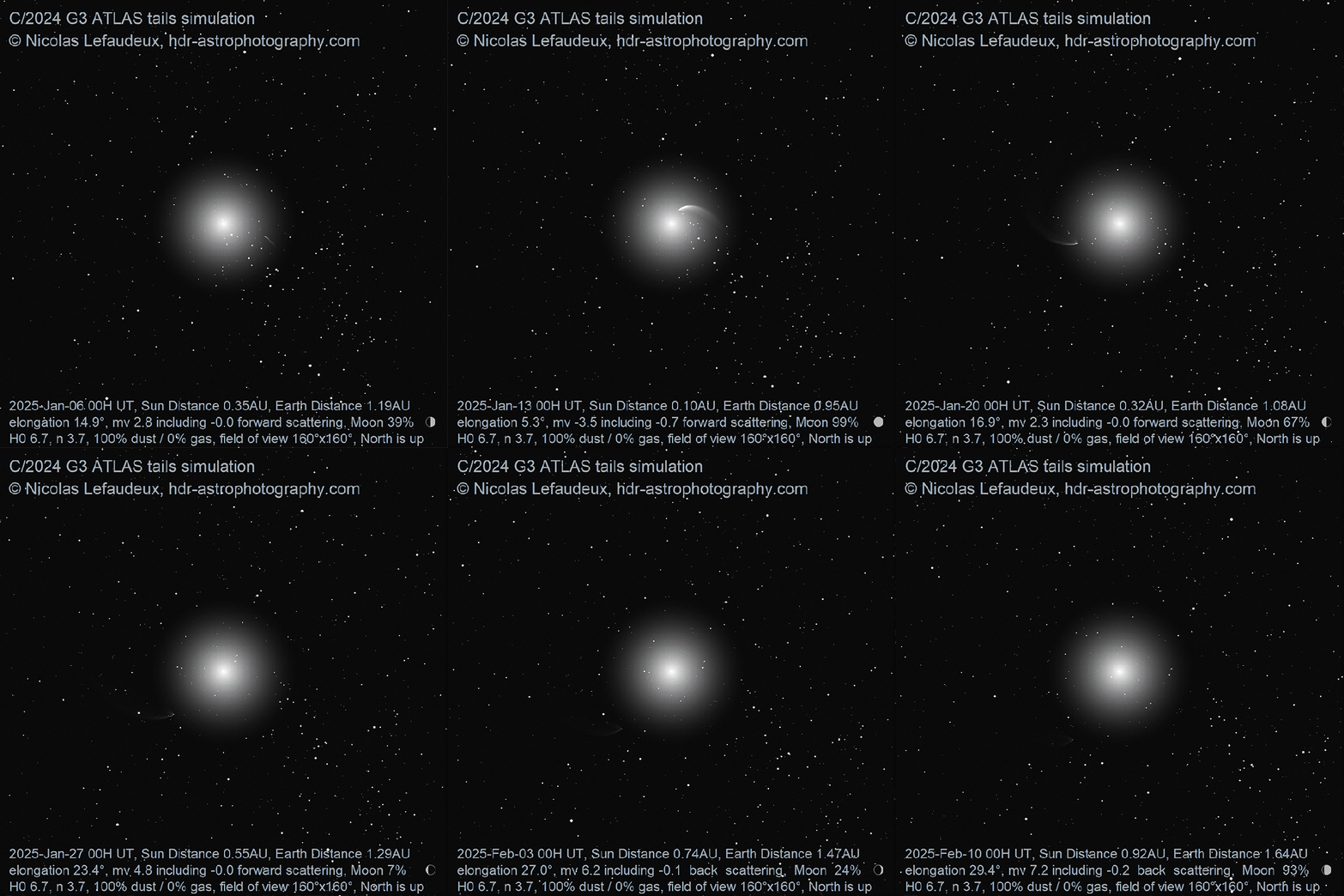
Comet ATLAS G3 tail simulation
Taken by Nicolas Lefaudeux on January 13, 2025 @
Forges-les-bains, france
Click photo for larger image

| |
Camera Used: Unavailable Unavailable
Exposure Time: Unavailable
Aperture: Unavailable
ISO: Unavailable
Date Taken: Unavailable
|
|
| More images
Details:
A wide but low brightness dust tail despite short solar elongation ?
As the comet ATLAS G3 has passed perihelion without breaking apart, I updated my simulations of the comet tails. Despite unfavorable viewing circumstances, it seems that comet ATLAS G3 has the potential to show an extended but rather low brightness dust tail between January 19th and 26th while the comet head remains hidden in the sun glare.
Observers located near the equator and in the southern hemisphere will be best placed to observe the comet. Yet, with its large extend, the low brightness, curved dust tail could be detectable photographically from the northern hemisphere between January 18th and 22nd, similarly as the tail of comet McNaught was 18 years ago. It would be located mostly in the constellation of Aquarius, and be overlapped with the zodiacal light, like McNaught dust tail.
Photographer's website:
https://hdr-astrophotography.com/
|
|
|