Circumhorizontal Arc/Circumzenithal Arc
Taken by Marcella Giulia Pace on April 25, 2022 @
Modica - Ragusa (ITA)
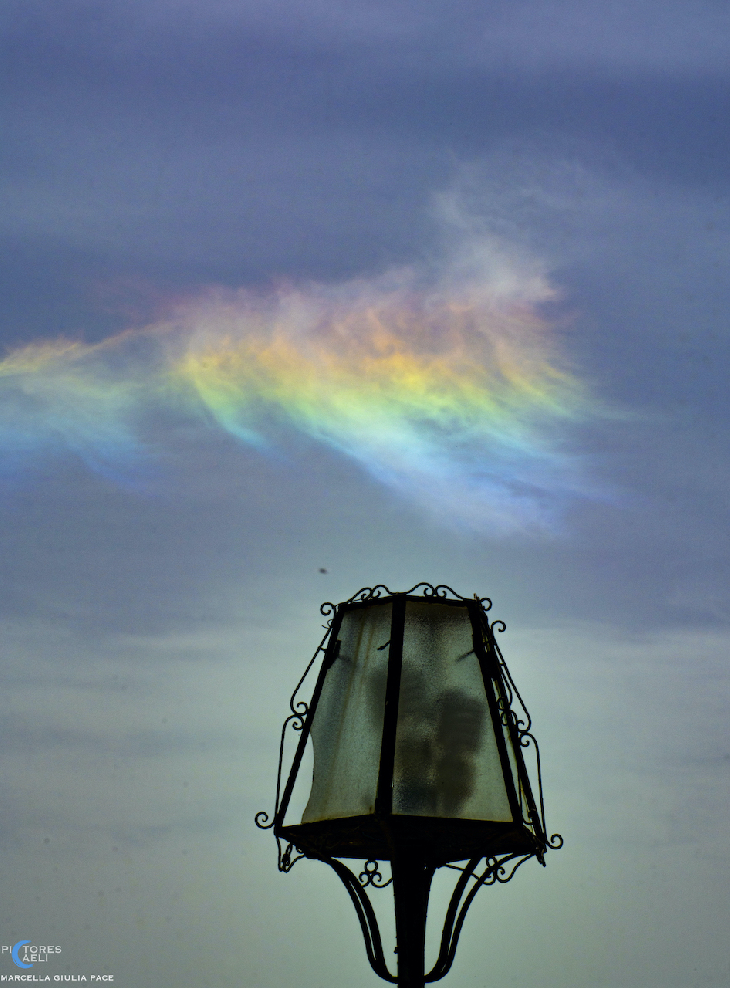
Click photo for larger image

| |
Camera Used: NIKON CORPORATION NIKON D7100
Exposure Time: 1/320
Aperture: f/22.0
ISO: 100
Date Taken: 2022:04:29 18:28:22
|
|
| More images
Details:
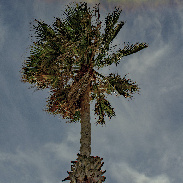
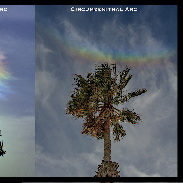
Comparison CZA/CHAT
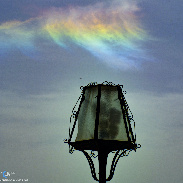
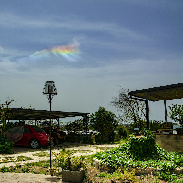
his fragment of a very rare colored arc is also called "Rainbow of fire" because it happens that it forms on types of frayed clouds (such as cirrus floccus or cirrus fibratus) that take on the incandescent colors of the rainbow, looking like flames in the sky.
The scientific name is Circumorizontal Arc (CHA) and occurs low in the sky and parallel to the horizon.
This arc is formed by refraction of sunlight within ice crystals that make up the cirrus clouds. It resembles the Circumzenital arc but while the CZA manifests itself near the zenith and above the Sun, the CHA manifests itself under the Sun and near the horizon as well as having inverted colors, the crystals that form them are instead the same. .
These crystals have a flat hexagonal shape and are suspended in the sky in a horizontal position. Essential for the formation is the height of the Sun, in fact, when the Sun has a height of less than 58 ° the angle of incidence of sunlight is not enough to generate refraction inside the crystal. For this reason, at my latitude it is possible to try to observe it in the central hours of the day from April to August. There are locations in the northern hemisphere, for example, that will never be able to observe CHA because the Sun never reaches the height of 58 °. They might try the night one but it is very rare indeed.
In this image we see a fragment of CHA but it can extend to completely cover the width of the SOUTH cardinal point
Photographer's website:
https://greenflash.photo/greenflash-gallery/greenflash-gallery/portfolio/circumhorizontal-arc/
|
|
|