camelopardius meteor
Taken by pescude on May 24, 2014 @
north fort myers, florida
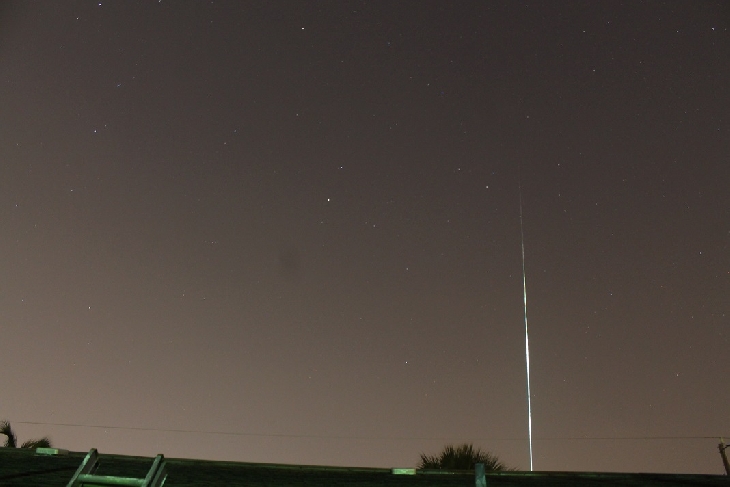
Click photo for larger image

| |
Camera Used: Canon Canon EOS REBEL T3
Exposure Time: 30/1
Aperture: f/5.6
ISO: 800
Date Taken: 2014:05:24 02:07:42
|
|
| More images
Details:
img 6736
author paul m escude
date taken 5/24/2014 2:07 am
copyright pescude@juno.com
dimensions 4272 x 2848
camera maker canon
camera model canon eos rebel t3
f-stop f5.6
exposure time 30 sec.
iso speed iso-800
focal lenght 18 mm
item type jpg file
date created 5/24/2014 2:08 am
size 3.31 mb
location north fort myers, florida
constellation camelopardius
camera is pointing north
The Camelopardalids (CAM) are particles from comet P/209 Linear and are predicted to peak near 7:00 Universal Time on May 24th. This timing favors North America. The radiant lies in a high northern position of 08:08 (122) +79, which places it in an obscure area of eastern Camelopardalis. This position also lies roughly 10 degrees from the 2nd magnitude North Star, also known as Polaris. This area of the sky is best placed as soon as it becomes dark during the evening hours. As the night progresses the radiant will slowly lose altitude as it circles to the left (west) of Polaris. At the time of maximum activity (3am EDT, 2am CDT, 1 am MDT, 12am PDT Saturday morning) activity could be quite high with several shower members appearing each minute. Since this is a new encounter with these particles, there is also the chance that little activity will occur. Stream models indicate that the Earth will intercept several streams of particles produced by comet P/209 Linear during the past two centuries. While a good show may fail to materialize, this appears to be the most favorable opportunity to view a meteor outburst for many years to come. The circumstances could scarcely be better as it occurs during the weekend and the waning crescent moon will hardy be a factor.
Photographer's website:
No URL provided.
|
|
|