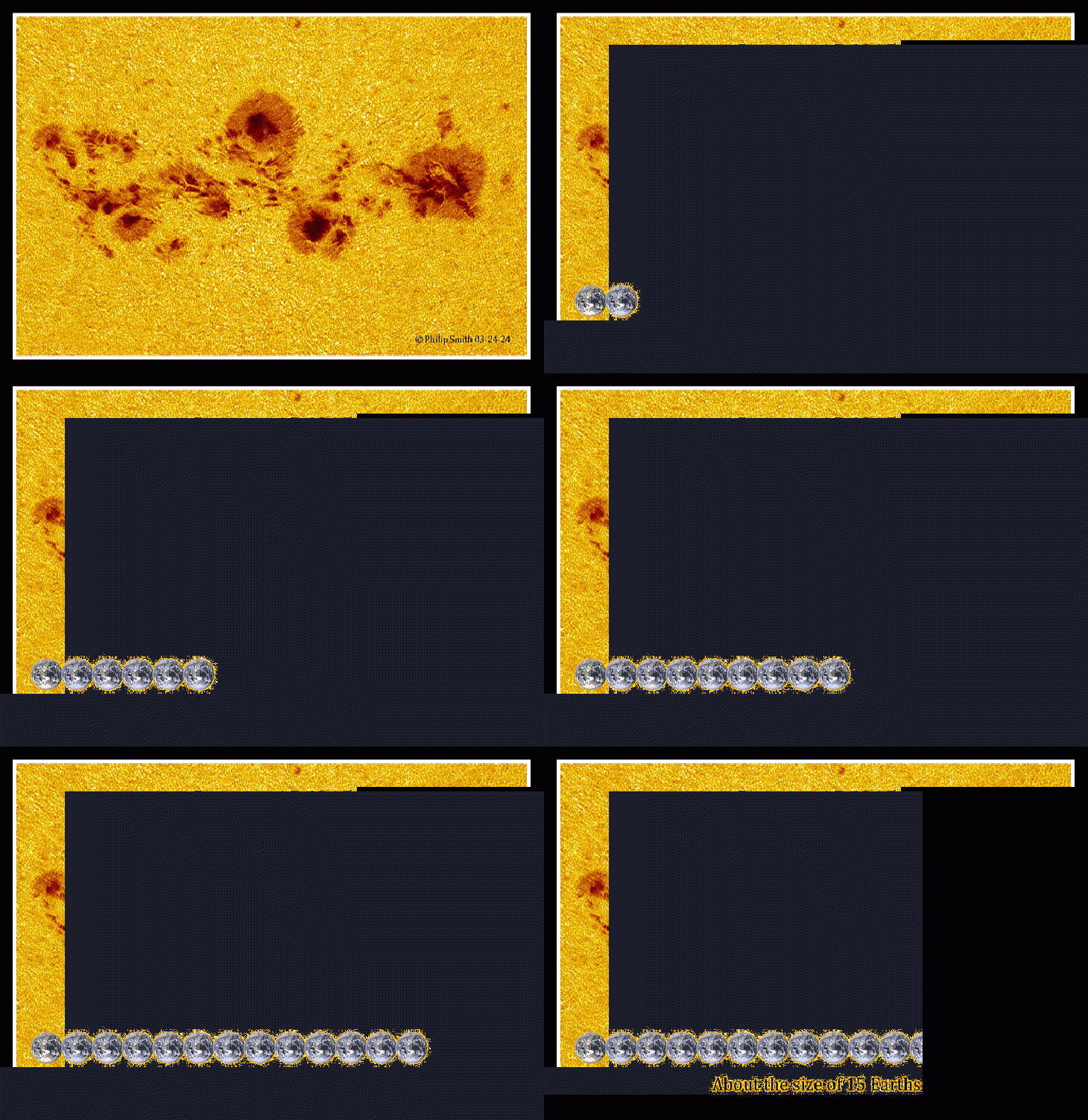
Sunspot AR3615 Short Animation
Taken by Philip Smith on March 24, 2024 @
Manorville, NY USA
Click photo for larger image

| |
Camera Used: Unavailable Unavailable
Exposure Time: Unavailable
Aperture: Unavailable
ISO: Unavailable
Date Taken: Unavailable
|
|
| More images
Details:
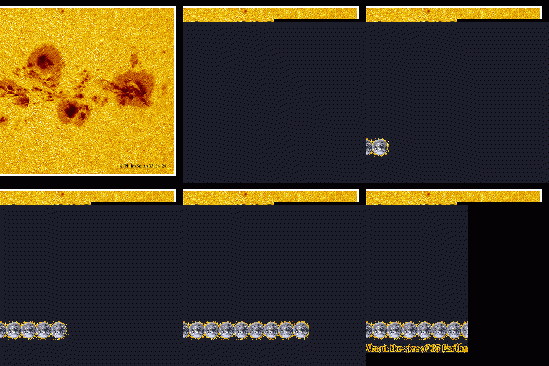
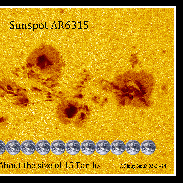
I wanted to make and share with you this short animation to show you truly how large the sunspot AR3615 is.
I read on Spaceweather.com March 19-24 archives about AR3615.
A POTENTIALLY DANGEROUS SUNSPOT: The New Sunspot AR3615 is complicated. It looks more like a rash than a sunspot, with a dozen-plus dark cores scattered randomly over a wide area. A magnetic map of the region shows why it is potentially dangerous: While most sunspots are bipolar with only two dominant magnetic poles (+ and -), AR3615 appears to have many poles crushed together. The close proximity of multiple pluses (+) and minuses (-) within a single sunspot group could lead to magnetic reconnection and strong solar flares.
Indeed, AR3615 is crackling with flares. The strongest so far is this M6.7-class explosion recorded by NASA's Solar Dynamics Observatory on March 18th (1919 UT):
I measured the AR3615 and found it to be about the size of 15 Earths side by side.
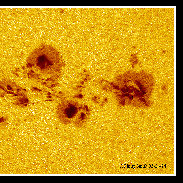
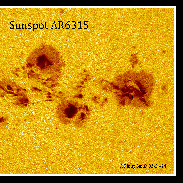
I imaged this close-up of the Large Sunspot AR3615 on 03-24-24 from my observatory.
This is a HUGE sunspot on the surface of the Sun right now. A sunspot is an area of cooler temperature than its surroundings that is generally caused by very strong magnetic fields from the interior well up through the surface. They can be the place of strong eruptions of charged particles, solar flares, or coronal mass ejections. The Sun is near the peak of its 11-year cycle of such activity. This spot is so large that it can be seen without magnification through solar glasses.
I used an ASTRO-PHYSICS 155mm f7 Starfire EDF - 6.1" aperture (155EDF) refractor with an ND3.0 PHOTO only solar film and Player One Apollo-M MAX camera with Baader 7.5nm Solar Continuum Filter 1.25". I used an ASTRO-PHYSICS 155mm f7 Starfire EDF - 6.1" aperture (155EDF) refractor with an ND3.8 PHOTO only solar film and Player One Apollo-M MAX camera with Baader 7.5nm Solar Continuum Filter 1.25".
Kind Regards To ALL 🙂
Photographer's website:
https://www.facebook.com/philip.smith.5686
|
|
|