Red sprites and fluctuations in the ionosphere
Taken by Martin Popek on February 8, 2017 @
Nýdek, Czech republic
Click photo for larger image

| |
Camera Used: Unavailable Unavailable
Exposure Time: Unavailable
Aperture: Unavailable
ISO: Unavailable
Date Taken: 2021:05:13 18:45:18
|
|
| More images
Details:
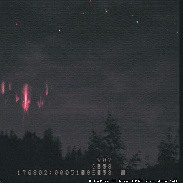
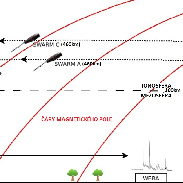
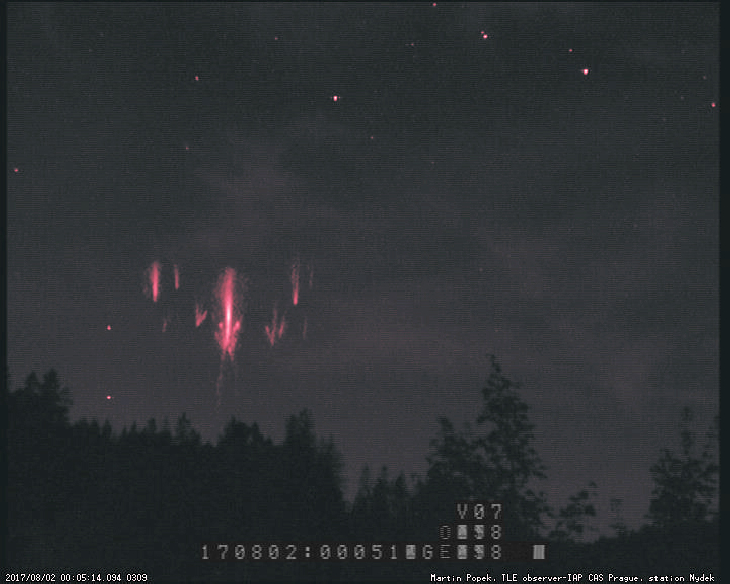
The result was very uncertain, but in the end we were lucky (😊) One red sprites from August 2, 2017 not only match the measurements made by the ESA Swarm satellite at an altitude of 460 km, but also the recordings taken from the ground. Here is the video red sprites from August 2, 2017 over NW Poland:
https://vimeo.com/manage/videos/549366106
I sent over 2000 observations TLEs in the years 2017-2020 to the project, but the result was about chance. The satellite must be almost exactly above the phenomenon because these fluctuations in the ionosphere are on the verge of the sensitivity of the SWARM probe measurements. In addition, the phenomenon must be intense enough to elicit a strong response in the ionosphere!
This extraordinary three-way coincidence is leading to better insight into how this type of lightning propagates into space. In addition, these new findings could potentially improve scientific models of the ionized part of Earth’s upper atmosphere - the ionosphere.
Scientists have long been interested in understanding if lightning propagating to higher in the ionosphere can cause fluctuations in Earth’s magnetic field.
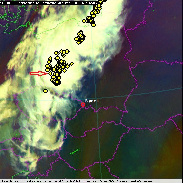
An article recently published in Geophysical Research Letters describes how researchers from research centers in Poland used magnetic field data from a satelites SWARM from ESA, observations of lightning activity detected by Geostationary Lightning Mapper (GLM, GOES 16/17 satellites) and from the terrestrial world Extremely Low Frequency Radiolocation Array (WERA) provide evidence of the links between TLEs and magnetic field fluctuations in the upper ionosphere.
https://agupubs.onlinelibrary.wiley.com/doi/10.1029/2020GL091507?fbclid=IwAR1PTECGUeDYK4rkySYCxE4leXQwdb446sp07YfYUwcQfdPopzPc4Iu6wHk
Ewa Slominska, from Poland’s Space Research Center, explained, “Lightning can generate ultralow frequency fluctuations leaking into the upper ionosphere.
More in the article on the ESA website:
https://www.esa.int/Applications/Observing_the_Earth/Swarm/The_curious_incident_of_Swarm_and_sprites_in_the_night-time?fbclid=IwAR1IpzGS84PQlGXwg9oFsSq2pBgSvPUs8Wl44OcmtkRSEVV_68m8T12JLpE
Photographer's website:
https://www.meteo-beskydy.com/observator
|
|
|