fireball
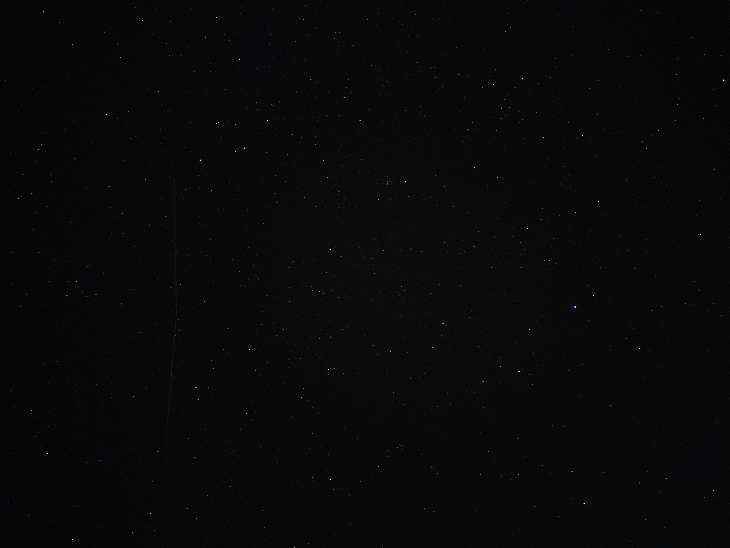
Taken by Rahul Sarang, Jay Parulekar, Prathamesh Halale, Dr. Vaibhav Rawoot, Chintamani Pai, Dr. Gowtham Sai on December 1, 2019 @
Devgad, Maharashtra, India.
Click photo for larger image

| |
Camera Used: Xiaomi Redmi Note 7 Pro
Exposure Time: 32/1
Aperture: f/1.8
ISO: 1600
Date Taken: 2019:12:01 04:10:23
|
|
| More images
Details:
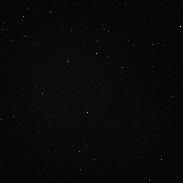
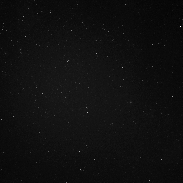
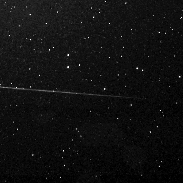
We are submitting herewith the images of a fireball visually spotted on December 1, 2019 at 04:10:23 am and was also captured in an image taken from a mobile phone camera (Xiaomi, Redmi Note 7 Pro) facing the night sky.
The image of fireball is captured from the campus of S. H. Kelkar College (latitude: 16.384428 N, longitude: 73.388059 E), Devgad, Maharashtra, India during the night sky observation session organized by Space Geeks, Mumbai, India. Meteor activity was seen during the night sky session and group of students attending the night sky session were guided to take images of the night sky from mobile during which this image was captured.
The captured image was further processed using scientific image processing software ImageJ. For your reference, original and processed images are attached. We are also attaching digitally zoomed processed image showing the details of streak.
Discussion about the image:
The direction of a fireball is from the left side of stars Caster and Pollux to the bottom (Please refer first two images attached). While analyzing the image, we observed that there is a slight bent in the streak captured. At first hand we neglected it but later we realized that this bent streak might provide some additional information regarding the fireball spotted. The captured fireball have relatively longer trail as seen in image. The image has significance considering a longer trail of fireball and deviation of its streak from straight line path.
It seems that meteor streak is a complex process as the space based rocks enters the atmosphere and ablates due to friction resulting in the meteor streak. It might be possible that rotation and non-spherical nature of the space based rock entering at hypersonic speeds can violently heat up the rock and while doing this, it also ionizing the gases coming out of burning and which glow for a longer time (all references cited below). Considering these aspects while doing the literature review, we decided to submit this image to you.
https://www.discovermagazine.com/the-sciences/a-meteors-lingering-tale
https://apod.nasa.gov/apod/ap100602.html
https://apod.nasa.gov/apod/ap050202.html
http://adsabs.harvard.edu/full/1907ApJ....26...95T
https://arxiv.org/abs/1504.06721 (previous work related to meteor observation)
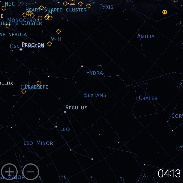
We are also attaching the image of background night sky taken from available night sky simulator. Meteor activity table available from IMO is indicating the possible sources as Nov. Orionids and Phoenicids.
Kindly let us know your feedback on our images and let us know if the image of fireball spotted is suitable for the news/publication at SpaceWeather.com
Technical details of the captured frame:
Image type: JPEG
Width: 8000 pixels
Height: 6000 pixels
Exposure Time: 32 sec
Aperture Value: 1.67 EV (f/1.8)
ISO Speed Rating: 1600
Photographer's website:
No URL provided.
|
|
|